The brain can work in ways we can’t comprehend. In numerous studies they
have been able to see just how much normal things like music can
effect, and even alter, it completely. These facts about music will give
you an insight into the complexity of your own mind.
1. The chills you get when you listen to music, is mostly
caused by the brain releasing dopamine while anticipating the peak
moment of a song.
Dopamine is a feel-good chemical released by the brain. This chemical
is directly involved in motivation, as well as addiction.
These studies found a biological explanation for why music always has
been such a huge part of emotional events around the world since the
beginning of human history.
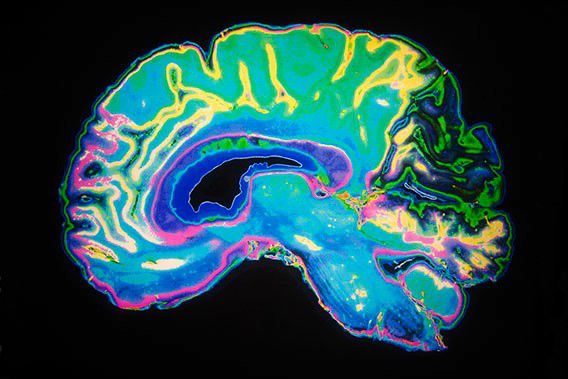
2. There are few activities in life that utilizes the entire brain, and music is one of them.
With Functional Magnetic Resonance Imaging (FMRI), a research team
recorded a group of individuals who were listening to music. They found
that listening to music recruits the auditory areas, and employs
large-scale neural networks in the brain. In fact, they believe music
can activate emotional, motor, and creative areas of the brain.
3. Playing music regularly will physically alter your brain structure.
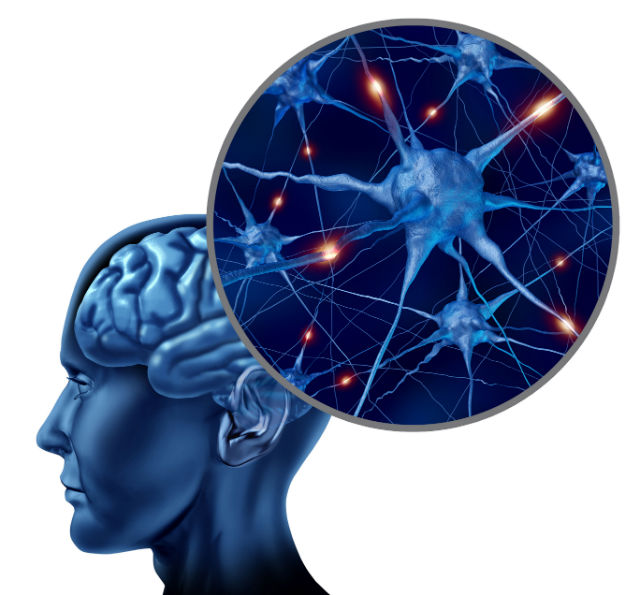
Brain plasticity refers to the brain’s ability to change
throughout life. Changes associated with learning occur mostly at
the connections between neurons. When studying musicians, they found
that the cortex volume was highest in professional
musicians, intermediate in amateur musicians, and lowest in
non-musicians.
4. The brain responds to music the same way it responds to something that you eat.
As stated above, dopamine is a chemical released by the brain. This
chemical is connected with the feeling of euphoria which is associated
with addiction, sex, and even eating. Dopamine is what enables a person
to feel the pleasures of such things. A study using only instrumental
music proves that anticipation for a musical rush released the same kind
of reactions in the brain as anticipating the taste of your food.
5. Listening to music while exercising can significantly improve your work-out performance.
Dissociation is a diversionary technique which lowered the
perceptions of effort. This technique can divert the mind from feelings
of fatigue, and heighten positive mood states like vigor. By using music
during low to moderate exercise intensities, you will find yourself
with an overall more pleasurable experience while working out.
6. An emotional attachment could be the reason for your favorite song choice.
Favorite songs are often context-dependent. Even though many people
often change their favorite song depending on the most recent releases,
it is proven that long-lasting preferences are due mainly to an
emotional attachment to a memory associated with the song.
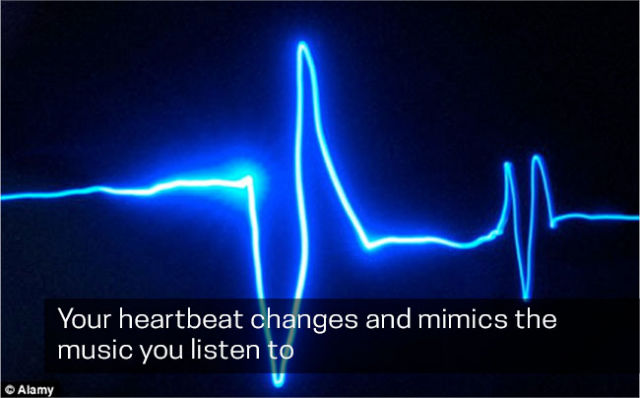
7. Your heartbeat changes to mimics the music you listen to.
Music is found to modulate heart rate, blood pressure, and
respiration. The cardiovascular system mirrored deflating decrescendos,
and swelling crescendos in a study of 24 volunteers. Distinguishing
changes in sound patterns were even found to be equipped in those as
small as a developing fetus.
8. Listening to happy vs. sad music can affect the way you perceive the world around you.
The brain always compares the information that comes through the eyes
with what it expects about the world, based on what you know. The final
results in our mind is what we perceive as our reality. Therefore,
happy songs that lift your spirits make you see the world around you
differently then that of a sad person.
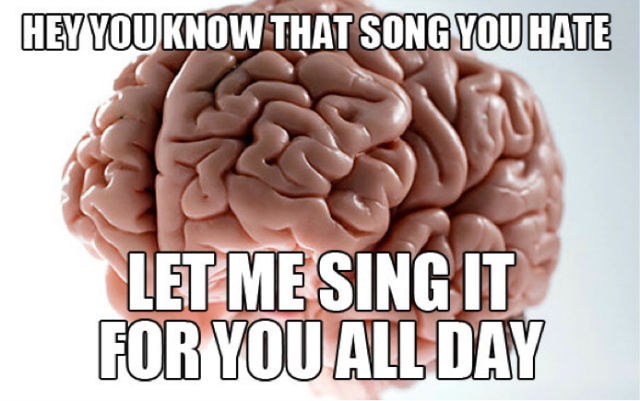
9. An “earworm” is a song that you can’t seem to get out of your head.
An earworm is a cognitive itch in your brain. This “brain itch”
is a need for the brain to fill in the gaps in a song’s rhythm. The
auditory cortex is a part of your brain that will automatically fill in a
rhythm of a song. In other words, your brain kept “singing” long after
the song had ended.
10. Music triggers activity in the same part of the brain that releases Dopamine, the “pleasure chemical”.
The nucleus accumbens is a part of your brain that releases Dopamine
during eating, and sex. The most interesting part, is that the nucleus
accumbens is just a small part of the brain that gets effected by music.
It also effects the amygdala, which is the part of the brain used to
process emotion. for music.
11. Music is often prescribed to patients with Parkinson’s Disease and stroke victims.
Music therapy has been around for decades. Music triggers networks of
neurons into organized movement. The part of the brain the processes
movement also overlaps speech networks. These two key elements help
patients overcome the obstacles that most effect them such as basic
motor skills, and speech difficulties.
12. According to a study, Learning a musical instrument can improve fine motor and reasoning skills.
In a study of children, it revealed that those with three or more
years of musical training preformed better in fine motor skills and
auditory discrimination abilities then those who had none. They even
tested better for vocabulary and reasoning skills, even though those are
quite separate from music training.
1. Complain about the weather 2. Going to the pasar malam There's food, cheap slippers, random knick knacks, more food... 3. Drink teh tarik a.k.a. our national drink We even have competitions and national championships to find the best teh tarik master in the entire country. 4. Half-boiled egg + toast with butter and kaya + kopi 'o' = perfect breakfast BONUS: Let's throw roti canai in the mix too! 5. Eat nasi lemak for breakfast, lunch, tea time, dinner, supper... 6. Eat banana leaf with your hands. It tastes better one. 7. Crave for Ramly burger in the middle of the night Then purposely drive out to immediately satisfy your craving. 8. Hang out at the mamak 'til 3am to watch football or badminton 9. Drive for hours to another state e...
1. Your liver is actually bigger than your brain! It sounds crazy but it’s true, your liver is the second largest organ in your body! The skin is your largest organ and the brain comes in at third largest. As an adult, your liver weighs between 1.3kg and 1.8kg. 2. The liver is the only organ that is self-regenerating - like a starfish or cicak tail That’s what makes liver transplants possible. When someone donates part of their liver, both the donated part and the part left behind are able to regrow themselves into a complete, fully-functioning liver. The liver can do this even if only 25% of it is left working. 3. It plays a double role by functioning as both an organ and a gland When asked, most people would probably categorise the liver as an organ but many may not know that the liver is also considered a gland. This is because it both performs important bodily functions that are essential to your...







Comments
Post a Comment